Zencloud Technologies

On-Demand App Development Services

Connected platforms that make it easy for customers to request a service, for providers to deliver it and for your team to manage every step in between.

Zencloud builds custom on-demand apps around your business model: customer booking, provider workflows, live coordination, payments, integrations and the operations tools behind them. Launching a new marketplace, digitizing an existing service or expanding into new areas, we help turn your service workflow into a working product.

The platform

Build Smarter On-Demand Service Experiences

An on-demand business needs more than a customer app. It needs a dependable way to take requests, find the right provider, coordinate the job, handle payments and deal with the exceptions, with customers, providers and your operations team all working from the same up-to-date information.

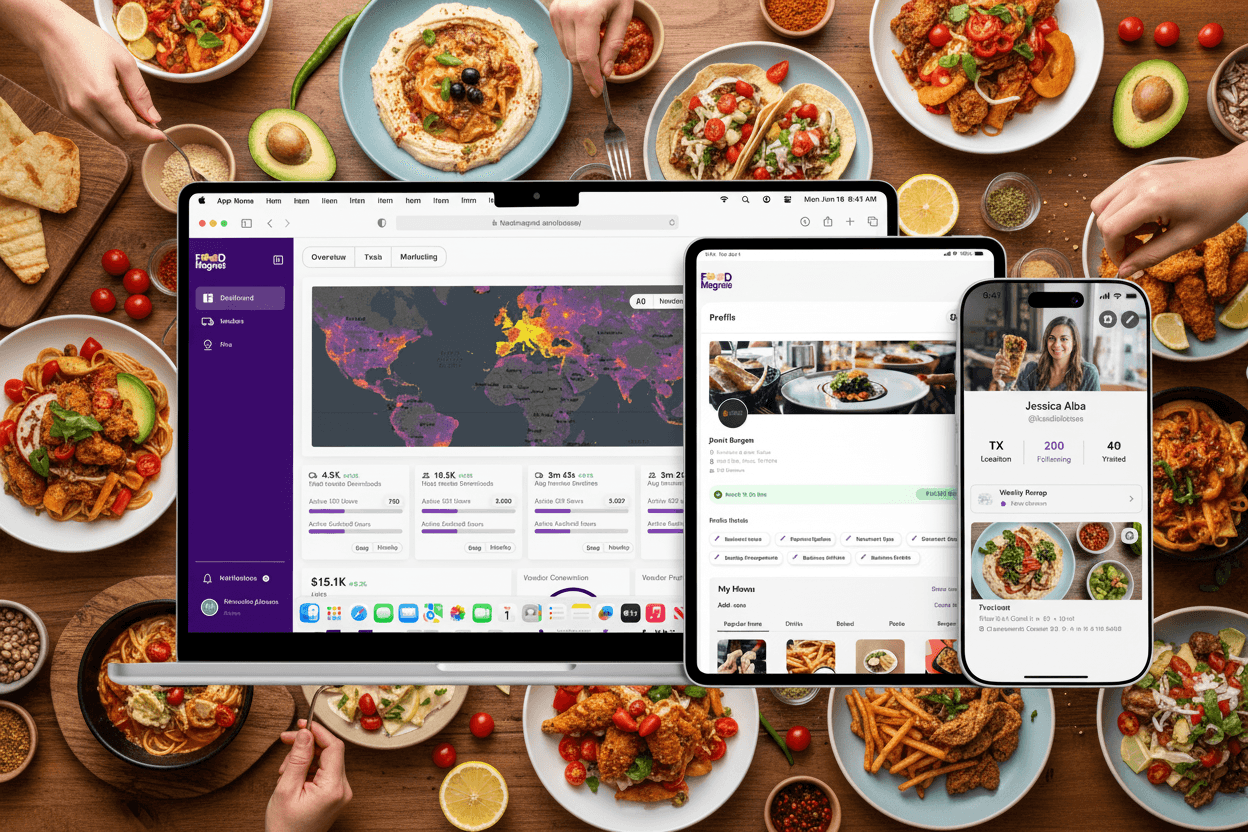
So we build it as a connected system: a customer app, a provider or driver app and an admin dashboard, plus merchant or partner tools when your model needs them. A request moves through it like this: request, matching and dispatch, provider acceptance, fulfillment, payment and payout, then rating and support.

Challenges

Challenges Facing On-Demand Businesses

  • Matching customer requests to provider availability across service areas

  • Picking the right provider by location, skills, capacity and service rules

  • Keeping customers informed when assignments, arrival times or statuses change

  • Handling payments, commissions, refunds and provider payouts across several parties

  • Connecting apps to maps, payment providers, notifications and existing systems

  • Staying reliable through peak demand, poor connectivity, cancellations and exceptions

Services

Our On-Demand App Development Services

Custom on-demand app development

Platforms designed around your service model, user roles and operating rules: mobile apps, web experiences, backend services, APIs, admin tools and integrations. Discovery pins down the essential workflows and what belongs in the first release.

Business models

On-Demand Solutions for Different Business Models

On-demand software supports many service models, and each has its own workflows and operational needs.

Delivery and local commerce

What the platform usually needs
Food, grocery, pharmacy and retail delivery: merchant order management, courier assignment, delivery status and settlements.
Features

Essential Features of an On-Demand Platform

The right feature set depends on your service category, marketplace structure and operating rules. Common capabilities:

  • Customer sign-up, profiles and secure authentication

  • Service discovery, categories, search and filters

  • Location entry, service coverage and availability checks

  • Instant requests and scheduled bookings

  • Provider onboarding, profiles, availability and status

  • Matching, dispatch, acceptance, rejection and reassignment

  • Live job status and location updates where appropriate

  • In-app messaging and notifications

  • Payments, receipts, refunds and transaction history

  • Provider and merchant earnings, commissions and payouts

  • Ratings, reviews, support and dispute handling

  • Admin dashboards, role-based access, audit history and reporting

Predictive demand, dispatch optimization, dynamic pricing and multi-stop routing come later, once the business case, data and operational maturity justify their complexity.

Integrations

Real-Time, Payment and Third-Party Integrations

On-demand platforms depend on reliable connections between people, systems and transactions: maps and geolocation, payments, push and SMS notifications, identity and onboarding tools, CRM, ERP, analytics and support systems. Each needs a plan for authentication, data mapping, API limits, retries, duplicate events, webhooks, provider outages and reconciliation.

Payment design covers customer charges, platform fees or commissions, provider or merchant payouts, refunds, adjustments and settlement records. For complex billing and payout workflows, our fintech software solutions cover the financial side in more depth. Live tracking is treated as an engineering requirement too: location permissions, background behaviour, battery use and delayed updates all need handling.

AI

AI and Automation for On-Demand Operations

Automation can coordinate requests, prioritize available providers, support demand planning and cut repetitive operational work through matching recommendations, demand forecasting, support assistance and workflow alerts. Automated decisions run on defined business rules and reliable data, and your staff can review or override them.

AI should solve a defined operational problem, such as reducing manual assignment or improving provider utilization, not be bolted on for its own sake. If predictive demand or intelligent matching is on your roadmap, our AI development services cover it.

Discuss your on-demand app project

Tell us which service you want to make available on demand, who fulfills each request, which markets you'll serve and which systems need to connect. We'll help you scope the product and a practical way to build it.

Approach

Custom On-Demand App vs. Ready-Made Software

Ready-made software can suit businesses with standard workflows and few customization needs. A custom platform makes more sense when your model depends on specific matching rules, several user roles, specialized payment flows, unique integrations, a differentiated customer experience or control over the product roadmap.

Weigh implementation effort, configuration limits, integrations, ownership, maintenance, data access and the cost of changing platforms as you grow. A focused MVP covering the full service journey (request, fulfillment, oversight and payment) is the safest way to validate the model before adding more.

Process

Our On-Demand App Development Process

We clarify target users, service category, geography, supply model, revenue model, service rules and constraints, and the assumptions that need testing.

Most first releases fit our 8–16 week MVP framework.

Security

Security, Scalability and Performance

A platform holding customer identities, location data, payments and provider records needs security designed in: secure authentication, role-based permissions, encryption in transit and at rest, API protection, audit logging, data minimization, retention controls, backup and recovery, and secure delivery practices. Privacy, payment, consumer-protection and sector rules vary by industry and market, so your legal and compliance advisers confirm which apply.

Scalability depends on service-area expansion, provider onboarding, peak demand, notification volume, location updates, background processing, observability and support capacity. The architecture is planned around expected usage and tested against realistic loads.

FAQs

On-Demand App Development FAQs

  • What is on-demand app development?

    It's building digital platforms that let customers request or schedule a service and connect with a provider who fulfills it. A solution usually includes customer functionality, provider workflows and an admin system.

  • What apps are needed for an on-demand platform?

    Most platforms need a customer app, a provider or driver app and an admin dashboard. Marketplace models may also need merchant or partner tools. The final structure depends on the service and operating model.

  • How much does on-demand app development cost?

    It depends on the number of apps, user roles, workflow complexity, integrations, platforms, security and operational features such as dispatch, location tracking and multi-party payments. A reliable estimate needs a defined scope and technical discovery.

  • How long does it take to build an on-demand app?

    It depends on scope, number of platforms, integrations, design and testing. A focused MVP is a very different project from a multi-region marketplace; most first releases fit our 8–16 week MVP framework.

  • Can you build a custom on-demand marketplace app?

    Yes. A custom marketplace can be designed around customer, provider and admin workflows, including discovery, requests, matching, payments, reviews and operational controls.

  • Can an on-demand app include real-time tracking?

    Yes, where the use case needs it. Tracking depends on location permissions, device behaviour, connectivity, mapping services and battery limits, and the app should handle delayed or missing updates gracefully.

  • Can you integrate payment gateways and third-party services?

    Yes. Scope can include payments, maps, notifications, identity tools, CRM, ERP and analytics. Provider access, API documentation, market availability and commercial terms are confirmed during planning.

  • Can you upgrade or extend an existing on-demand app?

    Yes. We assess usability, architecture, performance, security, integrations and maintainability, then recommend targeted improvements, modernization or a phased rebuild.

  • How do you keep an on-demand platform secure?

    With secure authentication, role-based access, protected APIs, encryption, audit logs, secure development practices and appropriate data retention. The specific controls depend on the data and markets involved.

  • What should be included in an on-demand app MVP?

    The essential service journey: customer request, provider fulfillment, operational oversight and the required payment flow. Advanced automation and secondary features follow once the core model is proven.