Zencloud Technologies

Grocery & Food Delivery App Development Services

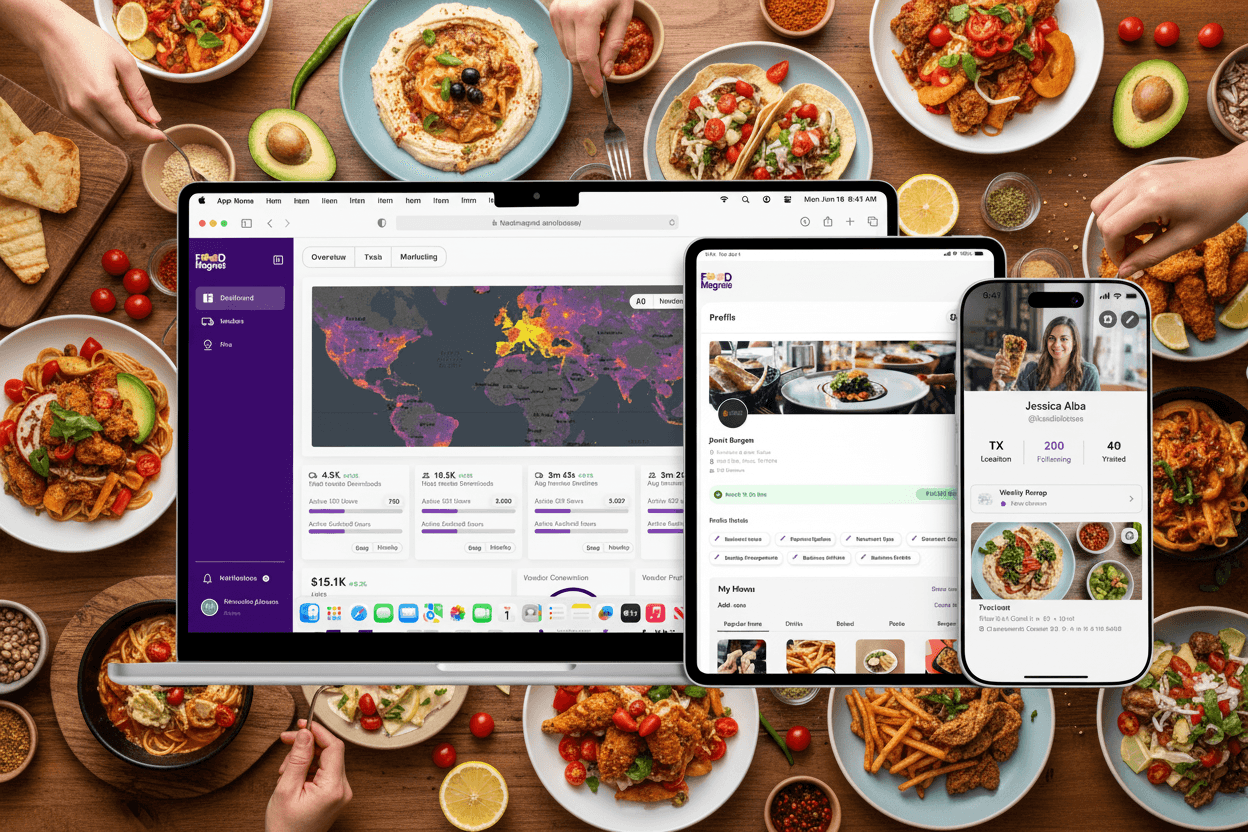
Grocery and food delivery app development means building the tools customers and operations teams use to browse products or menus, place orders, coordinate fulfillment, take payments and track deliveries. Depending on your model, that's a customer app or web store, a store or restaurant panel, a courier app and a central admin dashboard.

We help you scope the right system for a grocery ordering app, a food delivery platform or a multi-vendor marketplace. It starts with how your business works today: products, vendors, inventory, delivery zones, order volumes and the systems you already run.

Solutions

Build the Right Grocery or Food Delivery Solution

A single-store grocery app needs different things from a restaurant delivery platform or a marketplace with many vendors. The business model decides who manages products, who accepts orders, how stock updates, how deliveries are assigned and who fixes problems.

Grocery delivery apps

Category browsing, search and filters, prices and availability, cart, delivery or pickup options and order tracking. Depending on operations, add substitutions for unavailable items, weighted products, scheduled delivery windows, minimum order rules and stock syncing.

Architecture

The Core Parts of a Delivery Platform

A delivery app is rarely just the app customers see. These are the pieces most platforms need, and the decision each one forces.

Customer app or web ordering

Typical capabilities
Sign-up, address, store discovery, search, product or menu details, cart, checkout, payment, order history, support, notifications
Important decisions
Which journeys are essential for launch? Do customers order from one store or several?
Features

Features to Prioritize for Launch

Prioritize by business model and by the operational risks each feature removes. A first release should handle the full order journey reliably before adding personalization or automation.

Launch essentials

Customer-facing
Account or guest checkout where appropriate, store discovery, search, product or menu detail, cart, delivery address, checkout, order confirmation, status updates
Operations-facing
Catalog or menu management, order acceptance and status, basic delivery assignment, user and role management, payment and order records, a support workflow
Business model

Choose a Business Model Before Choosing Features

  • Single-store or inventory-led

    How it worksOne retailer or operator manages its own catalog and stock and fulfills from its store or warehouse
    Key implicationsInventory accuracy, picking and packing, substitutions, delivery slots, store-level operations
  • Multi-vendor marketplace

    How it worksMany vendors manage their own products or menus; the platform handles discovery, orders, fees and fulfillment
    Key implicationsVendor onboarding, catalog ownership, commissions, split orders, settlement, support and disputes
  • Hybrid

    How it worksThe platform combines its own inventory with partner stores or suppliers
    Key implicationsClear stock ownership, fulfillment rules, pricing logic and reporting across supply sources
Integrations

Integrations That Keep Orders Moving

A delivery app is only as dependable as its connections. Depending on the business, that usually means:

  • Payment gateways and digital wallets for authorization, capture, refunds and transaction status

  • Maps, geocoding and routing for address checks, delivery zones and courier navigation

  • POS, ERP, warehouse and inventory systems for availability, prices, orders and stock

  • Push, SMS and email for order confirmations, status changes and operational alerts

  • Analytics and support tools for funnel measurement, issue resolution and service reporting

Each integration needs a plan for API access, rate limits, data ownership, sync frequency, retries, duplicate events, reconciliation and what happens when a provider is down. Payment and settlement flows are covered in more depth on our fintech software solutions page.

Process

Our Delivery App Development Process

Define the business model, customer groups, service areas, catalog, fulfillment approach, target platforms and launch goals.

Timeline and budget are estimated once requirements, integrations, dependencies, data quality and approvals are understood. Most first releases fit our 8–16 week MVP framework.

Discuss your grocery or food delivery app

Building for one store, a restaurant or food brand, or a multi-vendor marketplace? Tell us your target market, platforms, key order workflows, integrations and launch window, and we'll walk through the main decisions and next steps.

Security

Security, Privacy and Operational Reliability

Delivery platforms handle personal information, addresses, order histories, location data and payment events. Security is designed in through least-privilege access, secure authentication, protected secrets, sensible logging, dependency updates, backups, monitoring and incident response planning.

Payment and privacy obligations vary by provider, business model, jurisdiction and data handled, so your qualified stakeholders confirm which apply. We collect only the data each workflow needs and make location permissions, retention and access rules explicit.

Cost

What Affects Grocery or Food Delivery App Development Cost?

Cost depends on the number of user roles and apps, platform choices, catalog complexity, the number of vendors or stores, dispatch logic, inventory syncing, payment and map integrations, custom workflows, reporting, security, testing, migration and ongoing support.

A single-store ordering MVP is far simpler than a multi-vendor marketplace with courier dispatch, partner settlements, split orders and ERP integration. A useful estimate defines the launch scope, assumptions, third-party fees, acceptance criteria, dependencies and what's deferred to later releases.

FAQs

Grocery & Food Delivery App FAQs

  • What is grocery and food delivery app development?

    It's the design and engineering of software for browsing products or menus, placing orders, taking payments, coordinating fulfillment and tracking deliveries. Depending on the model, the system can include customer, store or vendor, courier and admin interfaces.

  • How do you develop a grocery delivery app?

    Define the business model, target users, service areas, catalog, fulfillment process and integrations. Map the core journeys, prioritize an MVP, choose the architecture, build and test the end-to-end order flow, then launch with monitoring and support.

  • What is the difference between a grocery app and a food delivery app?

    Grocery apps usually need inventory accuracy, product variants, substitutions, weighted goods and delivery slots. Restaurant delivery apps focus more on menu modifiers, preparation status and handoff timing. The exact scope depends on how the business fulfills orders.

  • What features should a grocery delivery app have?

    Common launch features are categories, search, availability, cart, checkout, delivery address, order confirmation, order status and support. Store operations usually need catalog management, stock updates, order processing and delivery scheduling.

  • Does a delivery platform need separate customer, courier and admin apps?

    Not always. Customers may use a mobile app or a web store, while couriers and operations teams use separate apps or responsive dashboards. The right structure depends on each role's workflow, devices, permissions and budget.

  • Can a grocery app connect to POS, ERP or inventory software?

    Often, if those systems offer suitable APIs or integration methods. The project defines data ownership, sync rules, error handling and reconciliation so prices, stock and orders don't drift apart between systems.

  • How much does grocery delivery app development cost?

    It depends on user roles, platforms, business model, custom features, integrations, inventory and dispatch complexity, testing and support. A reliable estimate follows discovery and a clearly defined launch scope.

  • How long does it take to build a food delivery app?

    It depends on scope, platforms, integrations, design approvals, data readiness and testing. Most first releases fit our 8–16 week MVP framework, and a credible plan names its dependencies, acceptance criteria and what's deferred.

  • Can the same platform support multiple grocery stores or restaurants?

    Yes, if it's designed for multi-vendor operations. That can mean vendor onboarding, separate catalogs, store-level availability, commissions, order allocation, payouts, permissions and dispute handling.

  • Can Zencloud modernize an existing delivery app?

    It depends on the current architecture, access to code and data, integrations, operational issues and the changes you need. Discovery shows what can be improved step by step and what may need migrating or replacing.